Can You Apply Microcement Over Existing Tiles? A Guide for UK Homeowners
Planning a bathroom or kitchen renovation but dreading the thought of removing your existing tiles? Microcement could be the solution you're looking for.
As one of the increasingly popular decorative finishes in homes across Scotland and the UK, microcement offers a seamless, contemporary alternative to traditional tiles. But what many homeowners don't realise is that, in some cases, it can be applied directly over existing tiled surfaces.
So, can you put microcement over tiles, and is it actually a good idea? Here's everything you need to know before starting your renovation.

Can Microcement Be Applied Directly Over Tiles?
The short answer is yes! Microcement can often be applied over existing ceramic and porcelain tiles, provided the surface is stable, securely bonded and properly prepared.
Unlike conventional concrete, microcement is applied in thin layers, typically creating a finish just a few millimetres thick. This makes it particularly suitable for renovations where removing existing tiles would be costly, messy or time-consuming.
However, the condition of your existing tiles is essential. Loose, cracked or unstable surfaces must be addressed before any microcement application begins.
Why Choose Microcement Instead of Replacing Tiles?
One of the biggest advantages of applying microcement over tiles is the potential to transform a space without completely stripping it back.
Less disruption during renovations
Removing old tiles can be a messy process, particularly in bathrooms and kitchens. Where the existing surfaces are suitable, microcement can reduce demolition work and the amount of waste generated.
A seamless, modern finish
Microcement creates a continuous surface without visible grout lines, giving bathrooms, kitchens and floors a clean, contemporary appearance.
A wide range of colours and textures
From warm beige and natural stone tones to charcoal and concrete-inspired finishes, microcement offers plenty of design flexibility.
Minimal additional thickness
Because microcement is applied in thin layers, it can be a practical alternative to installing another layer of traditional tiles, although existing floor levels, doors and drainage must still be considered.
How Is Microcement Applied Over Existing Tiles?
Professional installation involves several stages to create a durable, long-lasting surface.
First, the existing tiles are inspected to confirm they're securely attached and free from underlying moisture or movement problems.
The surface is then thoroughly cleaned and prepared. Depending on the product system, this may include abrading the tiles, applying a specialist primer and filling or levelling the existing grout lines.
Reinforcement may also be required to prevent the tile pattern from becoming visible through the finished surface.
Once preparation is complete, the microcement is applied in layers before being finished with suitable protective coatings.
Every installation is different, which is why using experienced microcement specialists is essential.
Can You Apply Microcement Over Bathroom Tiles?
Absolutely, provided the existing surface and waterproofing are suitable.
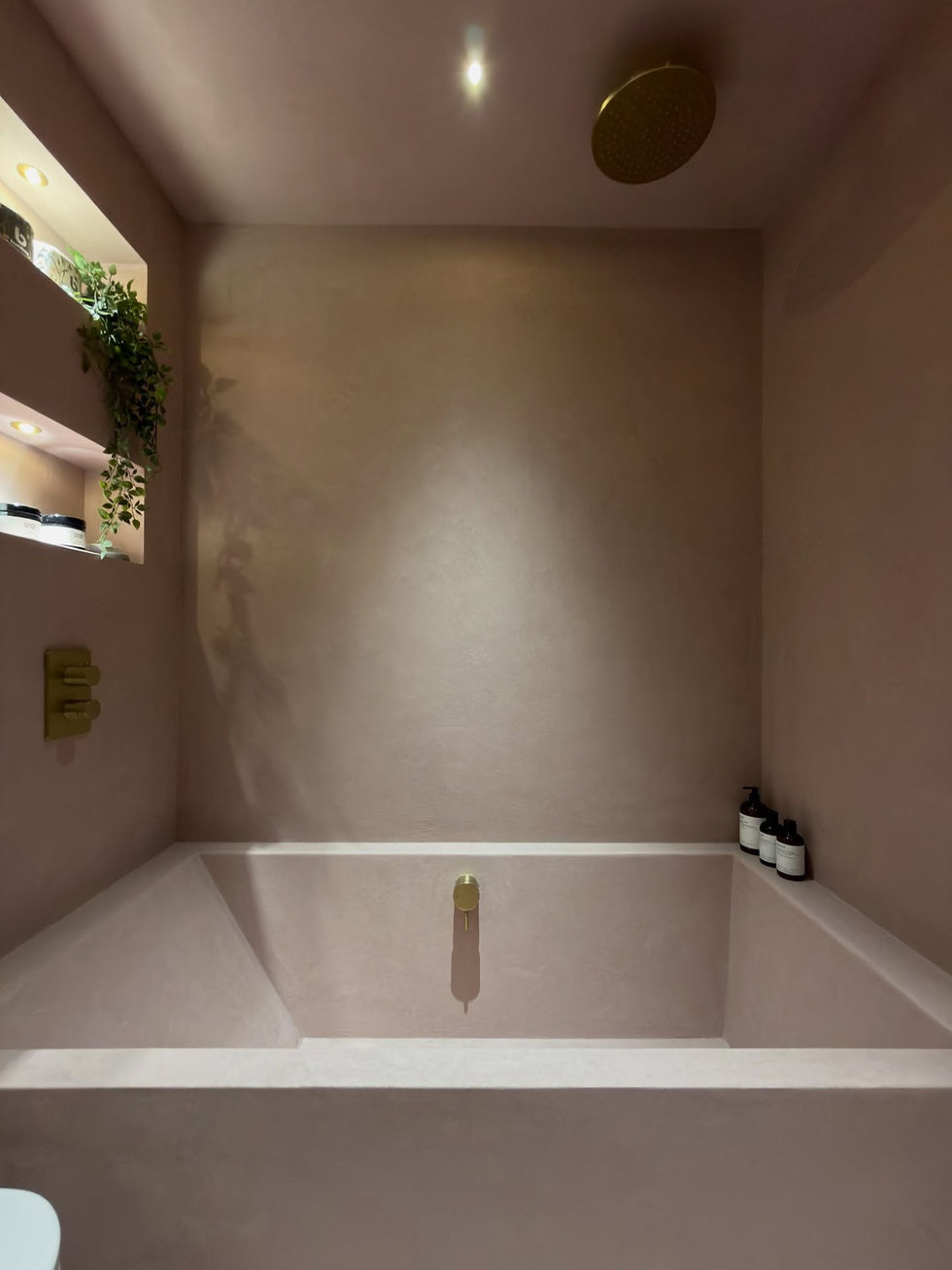
Microcement is particularly popular for bathroom renovations because it can create a seamless appearance across walls, floors and shower areas.
However, bathrooms require additional consideration. Existing waterproofing must be assessed, and shower areas need an appropriate waterproofing system beneath the decorative finish.
Microcement should never be used to cover up existing leaks or damp problems.
When correctly specified and professionally installed, it can create a beautiful, practical finish for contemporary bathrooms and wet rooms.
When Should You Remove Existing Tiles Instead?
Although applying microcement over tiles can be an excellent renovation option, it isn't suitable for every project.
Removing the existing tiles may be necessary if:
Large areas of tiles are loose, cracked or poorly bonded
There are underlying damp or waterproofing issues
The substrate is unstable or experiencing movement
Additional surface thickness would interfere with doors, drainage or fixtures
A professional assessment will help determine whether the existing tiles can be retained or whether removal is the better long-term solution.
Is Microcement Over Tiles Worth It?
For many homeowners, applying microcement over existing tiles offers an appealing balance between practicality and aesthetics.
It can reduce unnecessary demolition while introducing a bespoke finish that completely changes the appearance of a room.
Whether you're updating an outdated bathroom, modernising a kitchen or creating seamless flooring, microcement offers a versatile alternative to traditional tiling.
The most important consideration is making sure the existing surface is suitable and that the correct application system is used.
Microcement Specialists in Scotland and Across the UK
Thinking about transforming your existing tiled surfaces?
We specialise in bespoke microcement, Venetian plaster and decorative finishes for residential and commercial projects across Scotland and the rest of the UK.
From contemporary bathrooms and kitchens to seamless floors and feature walls, we can help you explore the possibilities for your space.
Get in touch with our team to discuss your renovation and find out whether microcement can be applied over your existing tiles.



Comments