Microcement vs Tiles: Which Is Better for Bathrooms?
Updated: 9 hours ago
A Complete Guide to Choosing the Right Finish
When designing or renovating a bathroom, one of the biggest decisions is choosing the right surface finish. Traditionally, tiles have been the go-to option. But in recent years, microcement has become an increasingly popular alternative.
Both have their advantages, but they create very different results in terms of aesthetics, maintenance and long-term performance.
In this guide, we break down the key differences between microcement and tiles to help you decide which is right for your bathroom.

What Is Microcement?
Microcement is a thin, hand-applied decorative coating built up in layers. Existing tiles, plaster or concrete may be suitable after assessing their stability, adhesion and moisture condition, then specifying the preparation and complete system.
It’s commonly used for:
Bathroom walls
Wet rooms and showers
Floors and vanity areas
What Are Bathroom Tiles?
Tiles are pre-fabricated pieces, usually ceramic or porcelain, installed individually with grout lines between them. They’ve been a standard bathroom solution for decades due to their durability and water resistance.

1. Aesthetic: Seamless vs Structured
Microcement
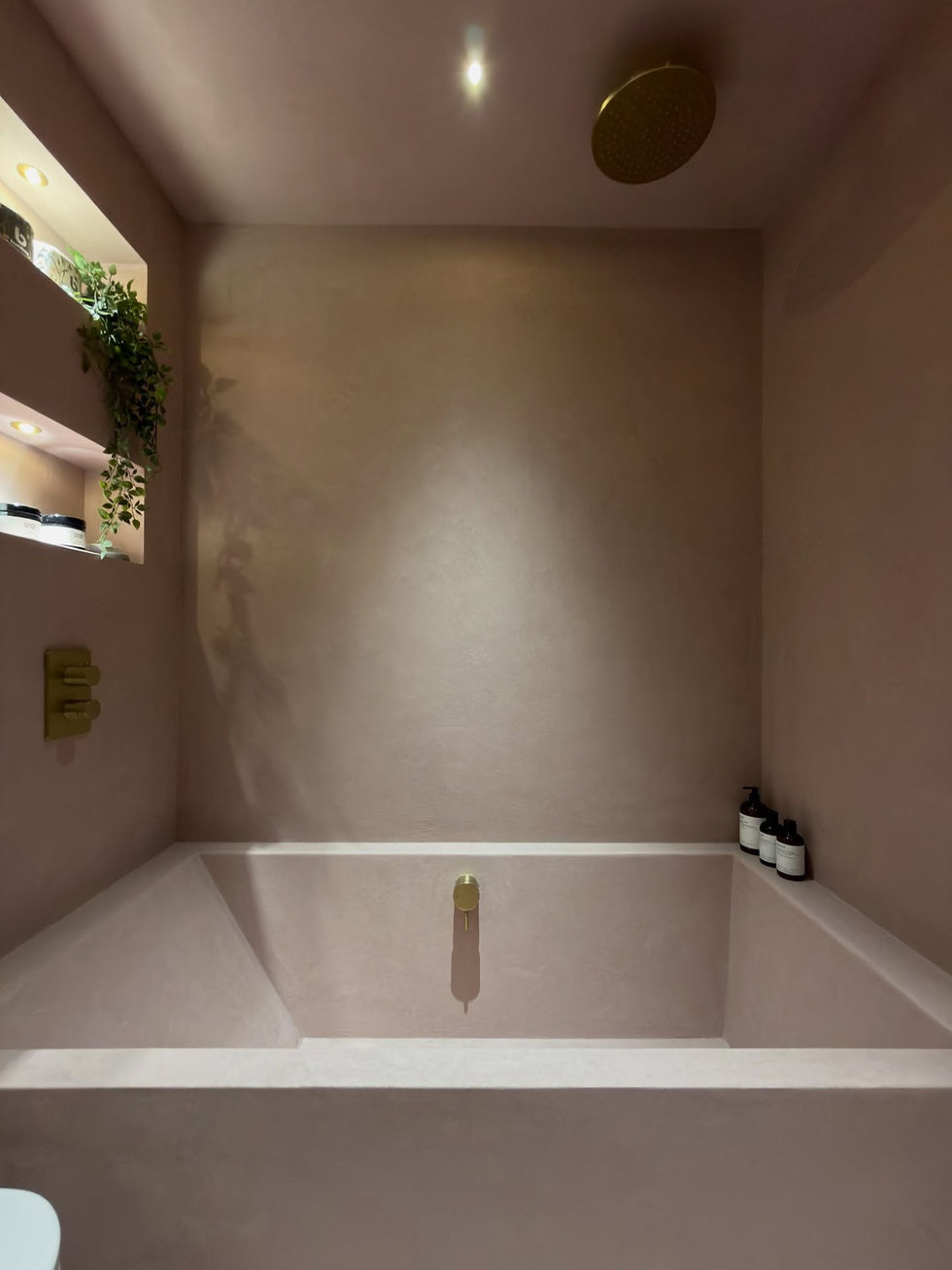
Microcement creates a continuous appearance with fewer visible grout lines. Required movement joints and construction details must still be respected.
Best for:
Modern and contemporary interiors
Spa-style bathrooms
Open, flowing spaces
Tiles
Tiles introduce structure through joints and patterns. They can be used decoratively but often feel more traditional.
Best for:
Classic or patterned designs
Spaces where visual segmentation is desired
Key takeaway: If you want a sleek, uninterrupted finish, microcement offers a more modern look.
2. Maintenance & Cleaning
Microcement
Fewer grout lines can make routine cleaning simpler. Use the installed system’s approved cleaning products and methods; the surface still needs care and is not immune to limescale, staining or mould in poorly ventilated areas.
Tiles
Grout lines require regular cleaning and maintenance. Over time, grout can discolour, crack or harbour mould, especially in wet areas.
Compare the care requirements of the actual finishes. Microcement reduces grout maintenance, but protective coatings, cleaning and possible sealer renewal still need consideration.
3. Waterproofing & Performance
Microcement
Microcement can suit bathrooms and wet rooms when the complete system is specified for the application. Performance depends on the substrate, waterproofing, junctions, drainage, compatible coatings and installation, rather than sealing alone.
Tiles
A tiled wet area also needs suitable substrate preparation, waterproofing, junctions and drainage. Tiles and grout should not be treated as a substitute for the required wet-area construction.
Both approaches can work in a correctly detailed wet area. Compare complete specifications and installation quality, rather than assuming either decorative surface alone provides waterproofing.
4. Installation Process
Microcement
Applied over suitable, assessed and prepared substrates
Existing finishes retained only where suitable
Hand-finished in multiple layers
Requires specialist installation
Tiles
Often require removal of existing finishes
Installed individually
More time spent on alignment and grouting
Key takeaway: Microcement can simplify renovations, but it must be installed by experienced professionals.
5. Durability & Longevity
Microcement
A correctly specified microcement system can provide a durable finish for its intended use. Substrate movement, impact, wear and aftercare affect performance; it is not universally crack-proof or scratch-proof.
Tiles
Tiles can provide a durable finish, but can crack or loosen if the substrate or installation is unsuitable. Joints and interfaces need suitable grout, sealant and maintenance.
Both finishes rely on suitable preparation and detailing. Microcement reduces visible grout lines but does not remove the need for movement joints or maintenance.
6. Design Flexibility
Microcement
Fully customisable in colour and texture
Can be applied across walls, floors and even ceilings
Creates a cohesive, continuous look
Tiles
Wide range of styles, colours and patterns
More segmented visually due to joints
Key takeaway: Microcement offers more flexibility for a cohesive, design-led space.
7. Cost Considerations
Microcement is often seen as a premium finish due to the skill required and the level of craftsmanship involved.
Tiles can vary widely in cost depending on material, but installation and long-term maintenance should also be considered.
Compare quotations for the same scope, including preparation, removal, waterproofing, detailing and aftercare. Either finish can be a substantial investment; there is no universal cost saving.
Microcement vs Tiles: Which Should You Choose?
The right choice depends on your priorities.
Choose microcement if you want:
A seamless, modern aesthetic
Fewer grout lines, with system-specific aftercare
A high-end, design-led finish
Choose tiles if you want:
Patterned or traditional designs
A wide choice of material and installation budgets
A more familiar installation method
Why More Homeowners Are Choosing Microcement
Microcement has become a preferred choice for contemporary bathrooms because it combines performance with design. It allows for a more considered, architectural finish that feels calm, cohesive and elevated.
When installed correctly, it delivers both practicality and long-term durability.
Expert Installation Makes the Difference
Microcement is a specialist finish. The quality of the final result depends heavily on the skill and experience of the installer.
At Unico Venetian, we assess the substrate and intended use before specifying preparation, the coating system, detailing and aftercare. Samples establish the visual direction, with natural variation in the hand-applied finish.
Thinking About Microcement for Your Bathroom?
If you’re planning a bathroom renovation and considering alternatives to tiles, microcement is worth exploring.
Get in touch with us to discuss your space and find the right finish for your project.


Comments