Venetian Plaster vs Paint: Which Is Better for Your Home?
Updated: Oct 14
Venetian plaster and paint offer different ways to finish a room. Paint is usually simpler to refresh and less costly to apply. Venetian plaster brings hand-applied texture, tonal variation and a choice of sheen, with more specialist preparation and finishing.
The useful comparison is not which material is always better, but which suits the surfaces, budget and design of your home. Both can belong in the same interior.

What Is Venetian Plaster?
Venetian plaster is a family of hand-applied decorative finishes. Traditional lime and marble-based products sit alongside other specialist mineral and decorative systems. The chosen material and technique determine the texture, movement and sheen.
Finishes range from softly textured or matt to satin and highly polished. The product and technique determine the effect, so “Venetian plaster” should not be treated as one uniform surface.
Application by hand gives each surface natural variation. That character should be part of the decision, rather than something expected to disappear in the finished wall.
What Is Traditional Paint?
Conventional interior paint offers a broad choice of colours and sheens. On well-prepared walls it can give an even, quiet background, and it is generally straightforward to redecorate when the scheme changes.
A painted surface can be an intentional design choice. If you want the wall itself to have material depth or a worked texture, decorative plaster offers a different approach.
Appearance: colour, movement and light
The distinction is clearest when light falls along the wall. An even painted surface reads mainly through colour and sheen; plaster also reveals movement created during application.
Paint can keep attention on furniture, art or joinery. Its relative uniformity is useful when the rest of the room already contains strong textures.
Venetian plaster can give a broad wall interest without a repeated pattern. A polished finish reflects light more strongly, while a softer Marmorino can sit quietly around other materials.
In our Marchmont home in Edinburgh, Marmorino was used on all walls and ceilings. The material connects the rooms while their joinery, worktops and furnishings retain their own character.
View a physical sample in the room. Daylight, artificial lighting and the viewing angle can change how much of the plaster’s texture and sheen you notice.
Durability
Paint performance varies with the product and sheen. A washable paint and a delicate decorative finish need to be compared on their actual specifications, rather than broad material names.
A suitable Venetian plaster finish can serve an interior for many years. Durability depends on the specific material, preparation, protection, use and maintenance; surfaces can still mark or be damaged.
In a hallway or commercial reception, likely contact and cleaning matter. A living-room feature wall or bedroom may have different demands.
Discuss the expected use when selecting the material and protection.
The substrate matters for both finishes. Existing cracks, movement or moisture need to be assessed before deciding what can be applied over the wall.
Maintenance
Painted walls may need touching up around switches, furniture and busy circulation areas. Matching the original colour and sheen can matter, particularly when the wall is seen in strong light.
Follow the care guidance for the installed plaster and any protective coating. Some finishes tolerate gentle cleaning with approved products; others need different treatment. Avoid abrasives, harsh chemicals or steam unless expressly approved.
A plaster repair also needs care: colour, movement and sheen may differ from the surrounding surface. Natural variation should not be taken as a guarantee that damage will be invisible.
Design Flexibility
With paint, the main choices are colour, sheen and product performance. With Venetian plaster, the material and application add further decisions about texture, movement and reflection.
Those decisions can relate to the architecture: a broad wall, a curve or a reveal may each show the same finish differently.
Decorative plaster options include:
Smooth polished finishes
Soft matt textures
Stone-effect surfaces
Concrete-inspired finishes
Metallic detailing
Mineral textures with visible hand-applied movement
Choose the effect alongside the room’s other materials, rather than treating the wall as a separate sample of decoration.
Which Rooms Benefit Most?
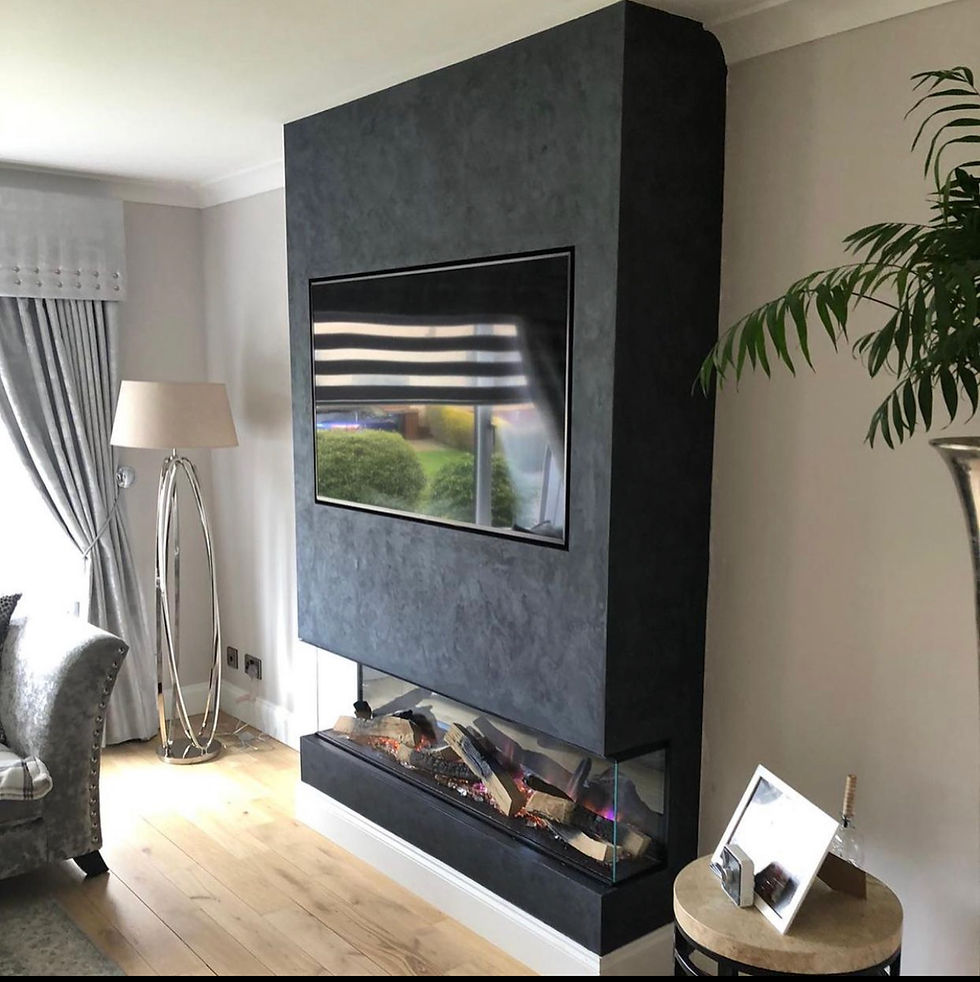
Venetian plaster is useful where the wall contributes to the design: behind a dining table, around a fireplace, on a staircase or across connected living spaces.
Possible applications include:
Living room feature walls
Entrance halls
Staircases
Dining rooms
Luxury bedrooms
Suitable bathroom walls, with direct-water areas assessed separately
Commercial reception areas
Combining painted walls with one plaster feature can keep the scope focused. A whole-room finish gives a different result, with more continuity between the surfaces.
Cost Comparison
Compare the full scope of the work, not just the material price.
Painting is generally the more affordable option upfront due to lower material costs and faster installation.
Venetian plaster generally involves specialist materials and several application and finishing stages. Preparation, samples, detailing and access also contribute to the quotation.
Our guide to Venetian plaster costs explains those factors. A durable finish can remain part of an interior for years, but it should not be sold as a guaranteed saving over paint.
Value, care and future changes
A well-chosen finish can contribute to the quality of an interior. There is no dependable basis for promising that Venetian plaster alone will increase a property’s sale value.
Think instead about how long you expect to keep the scheme. If you enjoy changing colours regularly, paint’s redecorating options may be useful. If the wall is intended as a lasting material feature, plaster may fit the brief.

Microcement on a basin: a different specialist coating, assessed separately for its surface and use.
Which suits your project?
Paint may suit you if you:
Want a quick and affordable refresh
Prefer changing colours regularly
Are decorating on a tighter budget
Venetian plaster may suit you if you:
Want visible material depth or hand-applied movement
Have an architectural surface you want to develop
Can allow for specialist preparation and finishing
Are comfortable with natural variation and the specified aftercare
Seeing the materials in context
Look at the proposed finish beside the flooring, timber and fabrics in the room. A wall sample considered on its own can give a misleading impression of the completed interior.
For either paint or plaster, establish what preparation is included and how the surface should be cleaned or repaired. A clear specification is more useful than a general promise of durability.
Planning Venetian plaster in Scotland
Unico Venetian works on bespoke plaster finishes in Edinburgh and the Lothians, Fife and wider Scotland, with selected projects elsewhere in the UK.
Share the surfaces involved, approximate dimensions, photographs and your preferred finish. Discuss your project so we can assess the preparation and next steps.
Explore our Venetian plaster projects completed across Scotland and the UK.


Comments